The Malpass Brothers

We spent last evening at Blue Note Grill to watch The Malpass Brothers, a home-grown band from Goldsboro, NC, that loves traditional bluegrass and country & western songs.

Chris and Taylor Malpass are as genuine with their retro Porter Wagoner suits and haircuts as they sound. There were bits of cornpone humor, sure, mainly provided by Taylor, though all six band members had their turn.

But the star of the show was their musicianship. Every member of the band was top-notch and their love for the material was thrilling.

Here’s a trailer for a documentary being made on the brothers called Heading Home.

Diarizing Update

Of the three diarizing methods I have been experimenting with:

  • I only occasionally take a 1-Second Everyday video. Most of my days are spent at a boring cubicle or my home office. If I take a video, it’s when we’re out and about on the weekends. Even then, we tend to go to the same places (like the Carolina Theatre), so I don’t bother.
  • I update the 5-year diary definitely every weekend, sometimes on weekdays depending on if anything interesting happened (see previous paragraph). I use a FollowUpThen reminder email at 9pm every night to remind me to do this.
  • I have not missed a day of blogging since I started on December 25, 2017. I have made daily writing and publishing a priority and experience no inner conflict about that decision. No big deal. This is just what I do.

I Got Through Today

I got very little sleep, about 5 hours. My fourth or fifth night of poor sleep. This usually puts me in a tender and irritable mood for the rest of the day.

My weight is 2.5 lbs over the control line. It started climbing last Thursday and continues to climb. The poor nights’ sleep is contributing to this, as are likely poor choices on my part.

Left early to get the car’s oil changed. Turns out it’s past time for its 120,000-mile service. The bill for this will be in the high three figures, which takes my breath away. I am a little ill-mannered to the service guy, though he is sympathetic.

I fold myself into the shuttle van taking me to work, and unfold myself as I emerge.

I notice I am bumping into stuff — hallway corners, my chair, my desk, the edges of things. This has always been a signal to me that I am in my head, thinking, and not in my body.

I hang on to the Constructive Living mantra of “accept your feelings, know your purpose, do what needs to be done.”

I deal with the various tasks I need to deal with. From the blue, I come up with workable solutions to two technical problems and the developers OK the ideas.

I skip lunch and just eat some hard-boiled eggs and cheese sticks. I drink lots of water and two cups of coffee.

I listen to Mary Schiller’s Daily Principles on my iPhone as I can only take in bite-sized bits of information. She sounds so perky and upbeat. Her words are a good reminder to ignore my aggrieved feelings about not getting enough sleep. Just get on with your day, do the best you can. The feelings pass.

I reflect that I’m grateful for all the help I received today: the service guy, the shuttle guy, the guys who worked on my car (and washed and vacuumed it), the colleague who gives me a lift back to the shop — all the people who keep my little world turning today.

It is rush hour on the drive home and my indignation is triggered multiple times. I notice the hot feelings, picture scenarios where I flail and yell at the drivers I think caused my indignation, then shake my head quickly “No.” There is no cause and effect to these feelings, despite circumstances; they’re impersonal. I am susceptible to indignation thoughts, especially when I am tired.

I get home, put my things away, start writing. Get the writing done and post this blog ASAP. Then, after supper, wash the dishes, take out the trash, and read a little. Go to bed and hope for a good night’s sleep.

App: Plants vs. Zombies 2

I experienced the original PopCap Plants vs Zombies game on my MacBook in 2009, coinciding with my first semester of PhD school. Possibly the worst or the best time to become addicted to a fun and lively game, depending.

I loved the game’s wittiness, aliveness, hilarious sound and visual design, and its simple, straightforward gameplay. It offered enough variety and twists for novelty, but was never so hard that I couldn’t figure out a way to beat every level. Plus, it sported the most darling, catchy, mood-setting, equally witty soundtrack; I just listen to a few bars and I am smiling for no good reason.

Crucially, it was also an indie project at Popcap. When EA bought Popcap, that lovely individuality was effectively squashed as the corporate hive-mind was devoted to “freemium” games where they could squeeze as many pennies as possible from their users.

On my iPad, I downloaded Plants vs Zombies 2. While the gameplay was familiar, and the wittiness still present, I was in the end disappointed by the experience and deleted it from my iPad.

The game is free but the non-stop ads to make in-app purchases for extra plants, gems, coins, etc. took the wind out of my sails (and out of their sales). I was also irked by obnoxious video ads for other games taking over the screen. I don’t care about these stupid games — turn the ads off!

The original game was not “pay to play”; everything I needed to win came with the game. Although some reviews say it is possible to win PvZ2 without the extra purchases, the player is forced to replay earlier levels to rack up more coins and gems so they can survive the tougher levels and unlock new worlds. This makes the experience more of a slog than a delight. While the reviewers praise the gameplay, they also lament the paywall “feature.”

God, and the new “worlds”: the old West, a pirate ship, ancient Egypt. That was as far as I got. I felt always a little lost as to where I was in this giant zombieverse. The clarity and simplicity of the original was gone.

Another reason I deleted the game was that it was so damn addicting! Because a round takes only about 3-4 minutes to play, I would tell myself, “Just one more. Shoot. OK, one more. Shoot. OK, just one last one.”

I got stuck on a couple of difficult levels, began obsessing how to win them, and repeated that “just-one-more” gambit for up to an hour at a time. While I knew the game was not inflicting any weird psychological damage, I also knew that it was not my friend and was keeping me from better things.

Like writing. And reading. And just sitting in the dark and being quiet, which is way more restorative.
Software: Fluid for macOS

Fluid is an app to (kind of) create apps: 

Fluid lets you create a Real Mac App (or “Fluid App”) out of any website or web application, effectively turning your favorite web apps into OS X desktop apps.

Facebook, Pandora, Gmail — any app you use in a browser tab you can turn into a standalone application.

Why is this useful? For me, it lets me have my YNAB app in its own browser window so that I can Command-Tab quickly to the browser to view my credit union accounts page and then back to the YNAB display. 

Another example: I’m writing this post in a SquareSpace “fluidapp.” I can quickly Command-Tab to the browser to do quick searches or copy URLs without doubling back to hunt among my tabs for the blog posting window.

Yes, sure, I could Ctrl-Tab to troop through the browser tabs, or I could simply open the browser tab in its own browser window. 

But I like the cleanliness and simplicity of having some web apps running in their own application windows. It means much less friction for me overall.


The Most Important Thing I’ve Ever Written? – Blog – Get Everything Done

Mark Forster‘s ideas, as I’ve said elsewhere on this blog, have been very influential on my thinking about task and self management. 

His 2006 post, made when he was still a time management coach, is an example of him developing his own methods to meet his own inconsistencies. And then, if that weren’t enough, to make the method as simple as possible.

Mark’s simple question — “How good am I feeling right now?” — and the simple grading — reply to yourself on a scale from 1-10 — are similar to other self-measures of subjective pain or exertion. But this question is so much more abstract and the results more powerful. Mark trusts the subconscious, the Undermind, your intuition, whatever you want to call it, to respond.

The other key component of this method is what you don’t do. Don’t try to fix anything, don’t try to raise the number, don’t try to make yourself feel better. That just puts more pressure on you.

Rather, ask the question, notice the answer, and then get on with your day. Many of Mark’s methods rely on such simple questioning, simply noticing what you’re doing and feeling. You are more powerful than you know, and tapping that power requires very little effort.

I tracked my responses to this question last fall, and started at 5 or 5-6. Over a very short time, it climbed to 8-9. These days, I’m pretty consistently at 7-8. 

In the comments, one of the posters suggested changing the question. Mark replied:

Also I don’t think your question is as versatile as mine. Would your question be capable of curing someone from fear of flying or get them through multiple chemotherapy and radiation sessions, plus being in a wheelchair unable to walk, type or eat solids? My question did.

Maybe, instead…”Crosswalk”?

The local arts council holds “progressive” dinners, where you start in one location for appetizers, move to another location for the main course, etc. They’ve just announced one where attendees will walk to five of the showcase loft spaces in architecturally significant older buildings in downtown Durham. It is prosaically yet functionally titled “Downtown Durham Loft Progressive Dinner.”

They also announced the third or fourth year of a progressive dinner to showcase the music and architecture of three historic downtown churches. It is titled “2018 Organ Crawl.” 

Does that sound…odd and…unmusical…to anyone else? Or maybe I have a tin ear…

Five Pots

I am working with a wonderful Three Principles coach, with a specific focus of starting a side business.

I've tried starting a side business before, but it kind of sputtered and I took it as proof that this was not something for me. It confirmed an acquaintance's belief that there are "employee mindsets" and "entrepreneur mindsets" and you're
either one or the other.

What is different this time is my coach's approach: no master plan, no blueprint for "how to do it," no pumping up the passions. Instead, it's about trusting my creative
prompts and going where I feel pulled (not pushed) to go.

She assigns homework based on what she hears in our conversation. During our chat, I told her the famous story about the pots. I also
told her about the day I tried on the idea of being a time management coach.

So my homework is to make five pots about becoming a time management coach. We don't know what those pots will look like. We don't know if "time management coach" is the destination. We know that this is where we will start and that the doing will generate new ideas.

Some ideas floating in my head at the moment about the kinds of pots I want to make:

  • Ramit's foundational idea to find your first three paying customers, as their feedback will tell you more about your idea than you can know.
  • Ed Emberley's instruction to his kids: "Think up something you can make and sell it." (via Austin Kleon)
  • LinkedIn offers a way for you to basically start blogging within its ecosystem. Maybe write two 600 or 800 word posts on a new way to think about time and task management. What would 3 Principles-based or an inside-out understanding of time management look like?
  • Maybe draft a short ebook or PDF as a giveaway outlining my ideas. Not "laws" or "things to do" or "lifehacks" but understanding how you work in the world and how that informs your results in time and task management.

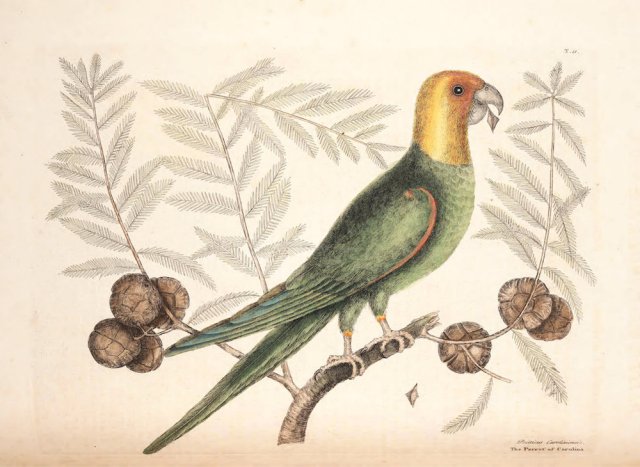
Carolina Parakeet, RIP

From today's Public Domain Review newsletter:

100 years ago today, the very last Carolina parakeet passed away in Cincinnati Zoo. The reasons for its extinction are complex and somewhat mysterious, though evidence points to human activity playing a significant role.

The following image of the Carolina Parakeet is from the Public Domain Review’s online store for fine art prints. The image appears in Mark Catesby’s Natural History of Carolina (1731).

Fat Loss Cheatsheet: What Works and What Doesn’t (for me) – Critical MAS

There are many health and fitness blogs and sites out there, but I enjoy most the blog of a serious dabbler named Michael Allen Smith who blogs at Critical MAS.

MAS has years and years of exercise, health, food, and fitness posts, among other topics (though his beloved hot beverage requires its own site). It was from MAS that I learned about the Potato Hack. His Best-Of page curates those years of posts into a more digestible format.

His post on his personal “fat loss cheatsheet” is a great example of what he does best: condense his self-experimentations and learnings into a highly readable format.

MAS makes the point on his blog — often — that he is not prescribing or recommending anything. He is only describing what practices work or don’t work for him. It’s up to the reader to find their own recipe for success.

Still, it can be fun to measure myself against someone else’s yardstick. So, let’s run down his list and see how I measure up. The strategies are from most important to least important.

  1. Defining the WHY. I have not done that. The main reasons have been health (reduce hypertension) and ego. Those reasons may be enough to get me started, but may not be enough to keep me going through that long middle period.
  2. Create a story. What story, supported by my WHY, will keep me from breaking down in front of the snack machine at 4pm? By not having that story, I risk relapsing and gaining the weight back. What will I do the day after I hit my target weight?
  3. Get good sleep. I have lousy sleep habits. I could cite many reasons but they are excuses. One time I did a current reality tree exercise on the various difficulties I thought I was facing in my life; the root cause of all of them was not going to bed early enough for a good night’s sleep.
  4. Stop snacking. This is true for me also and is the heart of the No S Diet, which is one of my mainstay methods. Once I start snacking, I do not stop.
  5. Remove trigger foods. We buy those only for special occasions; by and large, the house is pretty clean.
  6. Reduce daily eating window. I will sometimes skip breakfast and start eating at 1 or 2 pm, stopping before 8pm. But I’ve not kept the data to determine the optimal length of my own eating window.
  7. No liquid calories. I’m pretty good about this, though I do like a little sugar in my coffee. I will have cider or wine two or three evenings a week; Brad Pilon says the body will, overnight, burn through the alcohol first before burning the fat. One of Brad’s sayings is that it’s not weight loss that’s a problem as much as weight gain.
  8. Eat higher volume food that is lower in calories. This is a big idea I’ve gotten from MAS, though I’ve not adopted his Peasant Diet.
  9. Increase protein. Another idea I’ve adopted; I now keep hard-boiled eggs and nonfat Greek yogurt in the fridge at work for appetite suppression. If I snack, I snack on protein.
  10. Cook more at home. We do that, thanks to Liz’s wizardry.
  11. Baseline exercise. I do kettlebell routines 2-3 times a week (probably not for long enough), with some walking (not enough), some yoga and stretching (not enough).
  12. Intermittent fasting. Skipping the morning or evening meal is usually good enough for me; fasting for 22-24 hours once a week is doable, though Pilon recommends two 24-hour fasting periods in a week if you’re interested in fat loss.

Update: MAS added a new #4 to his list, an obvious one in retrospect: Measure your weight. He uses a tape measure, I use scales.