One of my long-term listening pleasures is BBC4’s In Our Time podcast. The show is hosted by Melvyn Bragg, a novelist, cultural reporter, broadcaster, and a member of the House of Lords, in no particular order.
The show’s premise is to pick a significant topic from history, culture, science, art, philosophy, etc., bring in three scholarly or scientific experts on the topic, and let Lord Bragg serve as the audience’s guide and interlocutor. Bragg’s job is to absorb lots of detail (written and prepared for him beforehand by the week’s guest experts) and then attempt to lay out the topic from end-to-end for the eager-to-be-informed listener. All in about 43 minutes, which makes it fast-paced with lots of finely argued details and centuries of stories regretfully brushed aside or glossed over in an attempt to get out of the studio on time. Continue reading “Review: “In Our Time” podcast and newsletter”

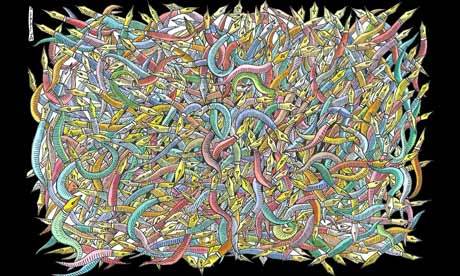
What would the 50-something you say to the 20-something you?
You’re going to need reserves of determination, and persistence, now, during the high points and right up to the moment you retire, if that ever happens. So, don’t be put off easily. You’re never too young, too inexperienced, too familiar, too old, too traditional, too radical, too uncool, too black, too female, too weird, too conventional, too deaf, too Portuguese, or too anything for anyone to stop you making the comedy you feel driven to make. And if you don’t feel that, then you shouldn’t be doing it.
And then I realize: The way for me to be better than my parents isn’t to do my taxes on time. That would be nice. But really I need to not give myself choices about how I spend my time. The more choices I have throughout the day, the more decisions I make, the more willpower I need, the more I get distracted from paying attention to the building blocks of a fulfilling life: gratitude, meaning, and ritual.
Being productive means simplifying how you use your time. Which in turn, simplifies your life.
Those are my principles, and if you don’t like them … well, I have others.
—Groucho Marx
Review: Elf, a reminder service to avoid overdue library fees
The Durham Country Library — which is a great organization I support with patronage and donations of both books and money — does not notify me when books are either coming due or are overdue. This can be inconvenient when life gets hectic or I forget that the checkout period for DVDs is different from that for books. If you don’t have a system set up to remind you about such things, then it’s all to easy to forget when they’re due.

Enter Elf (from its About page):
Elf is a web-based and email tool for library users to keep track of their library borrowings. Elf is like a personal assistant, whose task is to help with keeping track of what one has on loan from the library.
Designed with the busy or avid library user in mind, Elf is ideal for families with multiple library cards or for individuals (writers, researchers, students, readers, etc.) who have cards from different libraries.
Elf makes it easier to keep track of what’s due, overdue or ready for pickup from one or more library accounts. Users have the option to consolidate their library accounts into one account if they wish. This account is checked everyday and email notices are sent when items are coming due, overdue or when holds are ready for pickup. As well, get up-to-date realtime information by browser.
How many people knew about Elf before I did? Probably everybody, I bet. And not a word from any of you! I only discovered it by happenstance, through the weekly Back to Work newsletter.
Durham happened to be in its list of libraries, and I eagerly signed up. I set the level of advance notice I want to receive (3 days) and provided my cell number so I could be texted also. Elf also offers RSS and iCal feeds if you prefer to be notified that-a-way.
It’s a terrific service, it’s free, and it’s simple to figure out. If you use your library card a lot, you should check out (heh) Elf.




 Brownstudy's Blog