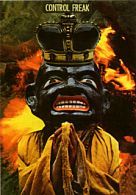
Try this meditation: Imagine that you are the wood and the fire that consumes the wood. First, focus your awareness on the part of you that is the wood. You may tremble or gasp, feeling the jolt of your solidity disintegrating, your form changing. As you shift your attention to the part of you that is the fire, you may exult in the wild joy of power and liberation. It may be tempting to favor the fire over the wood, to love the burning more than the being burned. But if you’d like to understand pronoia in its fullness, you’ve got to appreciate them equally. Can you imagine yourself being the fire and wood simultaneously? Is it possible for you to experience the deep pleasure of their collaboration? * The preceding oracle comes from my book, PRONOIA Is the Antidote for Paranoia: How the Whole World Is Conspiring to Shower You with Blessings.
How I rate songs in iTunes
I never fiddled with iTunes before I bought my iPod 5G in 2010 as my birthday present to myself. I found — and still find — iTunes to be both useful and maddening. Kirk McElhearn’s Take Control of iTunes ebook is a great resource for the music fan who just wants to get things done in iTunes and I recommend it.
But I daresay that one of the things within the ken of even the most novice user are rating music tracks. You can rate an album or each track of an album from 1 to 5 stars. Ratings are most useful in conjunction with smart playlists, where you can specify that only 5-star rated songs can be included or exclude any 2-star songs, and so on.
Given my mania for wanting to do things “right” (yeesh) I scoured the web for advice on different ratings systems. Most of the advice follows the standard “more stars=higher quality” pattern, like star ratings for movies. Yet I thought that too simplistic and too labor-intensive. Why would I want to rate every song in my iTunes collection? Why even bother rating tracks I dislike or am indifferent about? And — why keep them in iTunes if I don’t like them, anyway? Continue reading “How I rate songs in iTunes”
“Complexity is a chronic infection. Once you’ve got it you spend lots of time managing it. It almost never goes away.” — Jason Fried (37signals)
“Asylum of the Daleks”
Oh dear, my carefully crafted image as a man of the book and too clever by half will now fall to the ground when I talk about “Doctor Who” fanboyishness.
Ah well — let the egg roll, as they say. I don’t ride motorcycles or jump out of airplanes, I just document my little life on the web and try to pass the time agreeably with all I meet.
Please don’t look at me as I type this. It’s embarrassing.
Moffat, Davies, and the New Who
Ross Ruediger had a rather sour take on season 6 of Doctor Who. He had problems with Matt Smith‘s puppydog energy and showrunner Steven Moffat‘s “celebration of the clever” in dialogue and plotting the season-long story arc, which culminated in the solution to the mysteries of how the Doctor “died” and his connection to River Song.

It’s a matter of taste. I believe Moffat when he says that kids have no trouble following the plot complications and it’s the fans and critics who complain the most. I certainly enjoyed the cleverness of how (most) everything in seasons 5 and 6 clicked together; I like trying to outguess a master storyteller like The Moff. And I don’t think the arc worked against the show’s episodic nature, although I could argue that this is a Doctor Who for the modern age of TV, and season arcs, DVD collections, and being a flagship moneymaker for the BBC necessitate all sorts of choices that couldn’t have been imagined during the Classic Series’ run. Continue reading “Moffat, Davies, and the New Who”
Assorted links
- One of my favorite writing sites is by England-based sitcom writer James Cary and called, appropriately, “Sitcom Geek”. What I love about his posts are his practical and serious thoughts on the business of conceiving and writing situation- and character-based comedy (as opposed to sketch or standup comedy). Here’s his latest post, echoing the feelings/advice I read on many academics’ and fiction-writers’ sites: Just start typing
- Another favorite blog is by self-help writer and editor Doug Toft. Here’s one of his latest: 7 things to know before you use a self-help technique
- I also enjoy the rough and ready booster shot that is the language learning site, All Japanese All The Time. Khatzumoto continues to stun me with his inventiveness and cheek in generating advice on how to teach yourself any language (especially Japanese). A great read for auto-didacts and those who want to be. Here’s a recent post that helped me make up my mind on a personal issue that had stymied me: The problem is choice
- Who killed lard?
- Zombie grammar rules that eat your brain. First on the menu: split infinitives.
- Fascinating: Sewer workers (and dwellers) of Victorian London
Dear Ones, the ego self, that part of you that wishes to keep you small and separate in order to retain control, will rail up whenever you are about to take a huge leap in growth. It will do so by activating fear and doubt. So, why not, rather than allowing that fear and doubt to control you and stop your progress, see it instead as an indicator that something wonderful and empowering is about to break through? Remember all movement is forward movement and by staying in surrender and flow you will be navigating the Shift with the greatest amount of ease and assistance that is available to you. ~Archangel Gabriel
Yet another password creation rule
I ran across the following rule many years ago in what looks like a student paper (PDF link) by a fellow named Bernie Thomas and posted on the SANS site. SANS is a security training organization.
For sites where minimal security is a criterion, I tend to favor using this rule as it’s generally easy for me to remember. For high security, I rely on 1Password to generate hard-to-crack passwords. However, I can only use 1Password on my MacBook at home, and cannot easily access its stored information on my Windows PC at work. Therefore, I prefer having a simple password-creation routine that I can use to access low- to minimum-security sites in both locations. Continue reading “Yet another password creation rule”
 Brownstudy's Blog