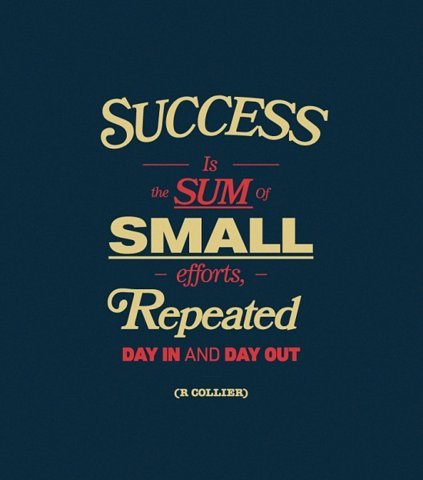
(via Day In and Day Out)
Sometimes we do find the words to express an idea, and only then realize what a stupid idea it is. This experience would suggest that our thoughts are not as clean and beautiful as we would like to believe. Instead of blaming language for failing to capture our thoughts, maybe we should thank it for giving some shape to the muddle in our heads.
Working from home means you can work any 18 hours of the day that you choose.

The MikeBook has been receiving tons of app upgrades due to Lion (haven’t upgraded yet; waiting a few months for the bugs to shake out).
In general, the app upgrades have caused no problem except for Safari, which disabled the Page Up, Page Down, Home and End keys. I mean…what?? Sorry, Apple, but I don’t have a Magic Trackpad, and I still use my quaint little keyboard to navigate through my web pages.
Fortunately, a poster to this thread on the Apple support forum provided the secret handshake:
So, using the wonderfulness that is Keyboard Maestro, I remapped my Home, End, Page Up, and Page Down keys to the above keystrokes. Now, I can use my keyboard the way God (and not Apple) intended.

In 2007, John Maloof ran across a storage locker at a thrift auction house that contained over 100,000 negatives of pictures. The photos spanned the years from the 1950s–1990s and were primarily urban scenes of Chicago and New York.
Maloof began posting the pictures on a blog and dug into the life of the woman who had taken these pictures: Vivian Maier. It took a lot of detective work, but it turned into a labor of love for Maloof, who has parlayed his interest in Maier and her photos into a handsome site, exhibitions, a film, and a book.
I particularly love her urban photos, seemingly taken on the fly, the sort of thing you might see yourself as you briskly walk past a street person or sightseers or a woman talking on a telephone. They’re wonderfully evocative of a different place and time.
Hoffman explains the nature of his work by offering an extended analogy. In the process, he deftly summarizes a lot of Eastern spiritual teachings.
Unfortunately, the clip omits Hoffman’s concluding line—one that throws the premise of many self-help books into question. Here’s that line:
“When you get the blanket thing, you can relax, because everything you could ever want or be, you already have and are.”
That statement might be a profound paradox—or pure nonsense. What do you think?
Everything You Want, You Already Have « Books for Behavior Change
Everybody has a plan until they get punched in the face. — Mike Tyson
Wednesday Workout: Testing your assumptions | I Will Teach You To Be Rich
Years back, when I was an angry young man, I read an interview with Phil Collins. Phil Collins might seem like an inappropriate music interest for an angry young man, and that’s right, but I was also a bored young man; it seems the two often go together.
Anyway, Collins said something remarkable, along the lines of, “Most people I only meet once in my life. I start on the assumption that they’re not arseholes.” That swept me off my feet. What a completely counterintuitive approach to human relations! It got me thinking, and should I ever write an autobiography, I’m afraid there’ll have to be a chapter entitled, “My adult life began when I read an interview with Phil Collins,” which is not the kind of thing blockbusters are made of.
Anyway, here’s a variant of the Collins Maxim: If someone criticizes you based on what appears to be a misunderstanding of what you meant, consider the possibility that theirs is a reasonable interpretation of what you actually said. Otherwise, it could be you who comes across like an arsehole.
Ran across this delightful post from a used bookseller in Pennsylvania. He acquired the July 1922 edition of Flapper magazine and reproduced an uncredited article that listed phrases and jargon that, while probably quite cheeky at the time, seem quaint and amusing now. It’s fun working out the chain of associations that lead from the slang to the definition.
I wonder really how old the writer of the article was; I smell a fuddy-duddy who wants to appeal to the “with-it” generation. I could imagine a Beatnik or Hippie dictionary article of the same stripe.
Some of my favorites:
L.A. King and C.M. Burton in an article entitled, The Hazards of Goal Pursuit, for the American Psychological Association, argue that goals should be used only in the narrowest of circumstances: “The optimally striving individual ought to endeavor to achieve and approach goals that only slightly implicate the self; that are only moderately important, fairly easy, and moderately abstract; that do not conflict with each other, and that concern the accomplishment of something other than financial gain.”

 Brownstudy's Blog